Guide ·
Cross-Chain Bridges: Explained with On-Chain Data
What a cross-chain bridge is, how the main bridge designs move assets between blockchains, the biggest protocols and risks, and how to follow a bridged transfer end to end.
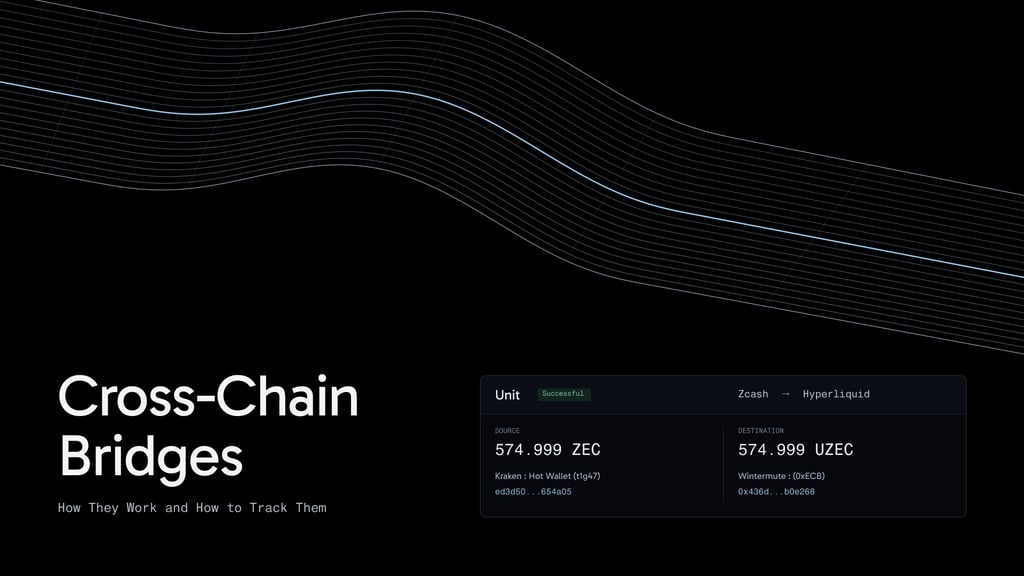
Summary
A cross-chain bridge is a protocol that moves value or messages between two blockchains, by locking, burning, pooling or swapping assets on one side and releasing them on the other.
Bridges follow four main designs: lock-and-mint or burn-and-mint, liquidity pools, intent networks where solvers front their own capital, and native-asset swap networks that pay out real coins such as BTC.
Bridges are frequent targets for hacks because they often hold large pooled deposits and rely on a small set of keys, verifiers or contracts. The Ronin, Wormhole and Nomad exploits each cost between roughly $190 million and $620 million.
Bridged funds stay traceable. Every transfer leaves a deposit on the source chain and a payout on the destination chain, and Arkham links the two legs for 12 supported bridge protocols.
How to Track a Cross-Chain Bridge Transaction With Arkham
Arkham tracks and links the two legs of a bridge transfer, so a trace that reaches a bridge carries on into the destination chain. The steps below follow one bridged transfer from start to finish.
Step 1: Open the source transaction: Paste the transaction hash or the sending address into the search bar at arkm.com. If you are new to transaction pages, our guide to TXIDs explains each of the fields that make up a transaction.
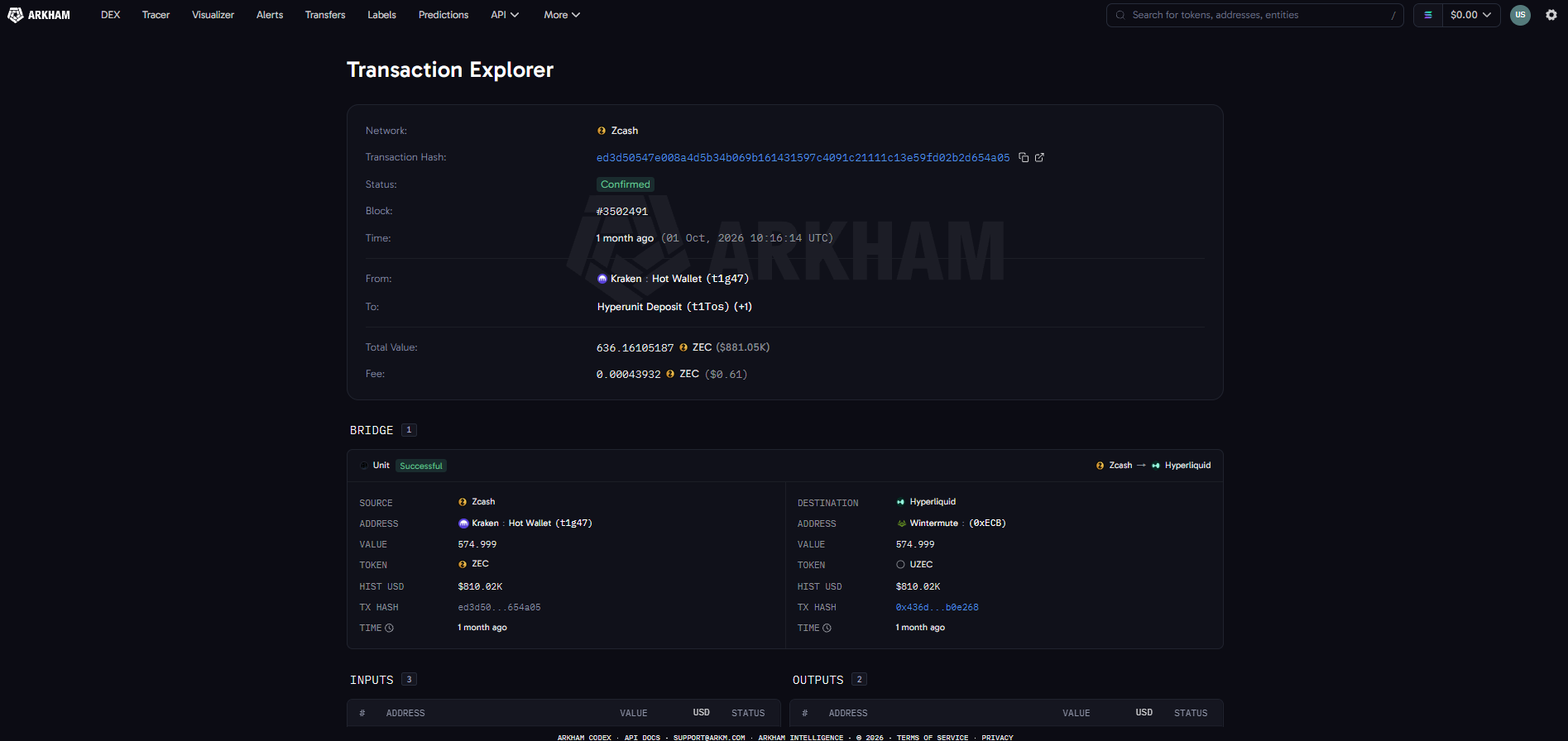
Step 2: Identify the bridge: Arkham labels bridge contracts and vaults, so the counterparty shows a protocol name rather than a bare address. In this example, the bridge used is the Hyperunit bridge which links various chains to Hyperliquid.
Step 3: Follow the link to the destination leg: Arkham shows the matching payout on the other chain, with its own hash, receiving address, token and amount. Clicking into the transaction hash on the destination leg opens up more details on the second transaction, allowing for a second check.
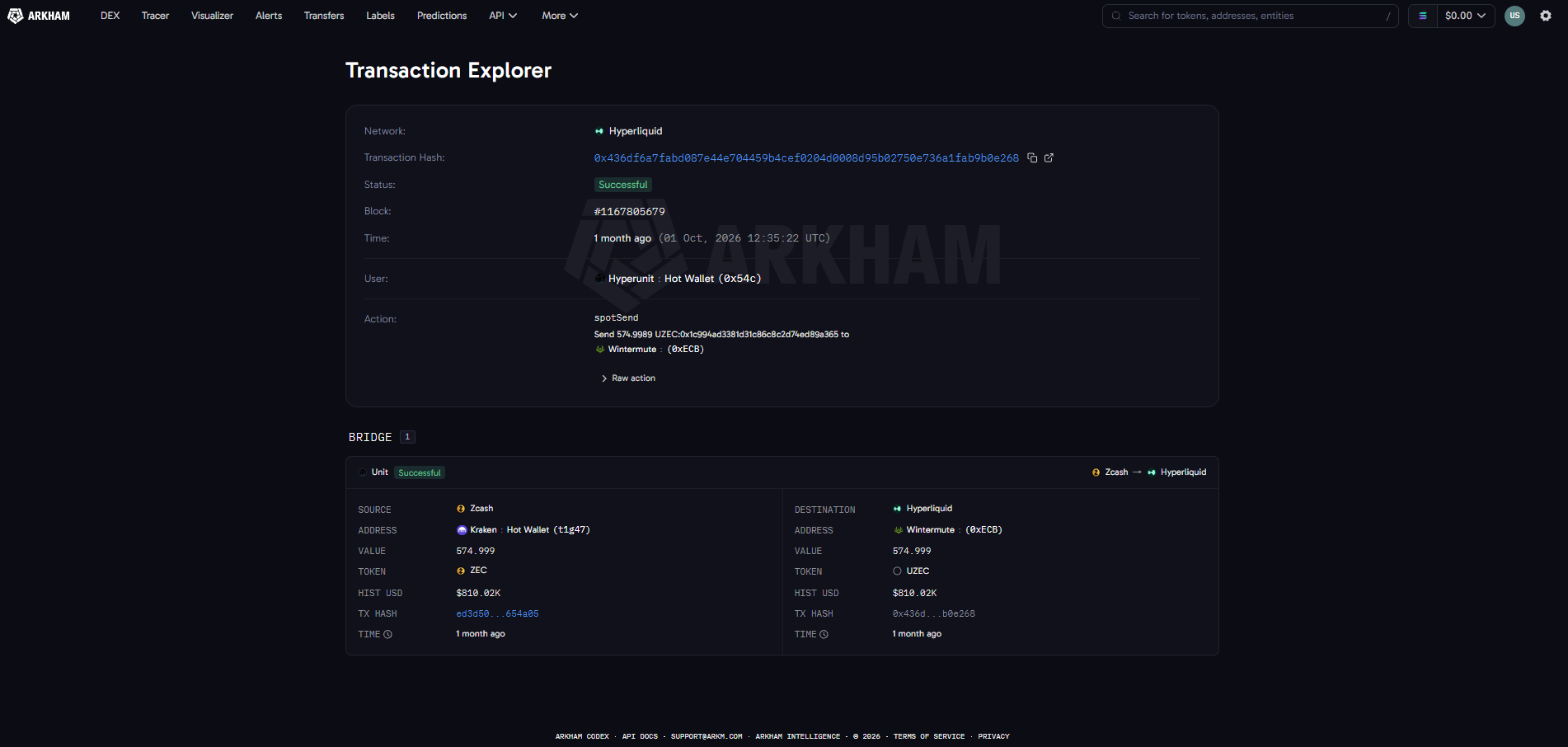
Step 4: Compare the two legs: Fees and swaps mean the amounts rarely match exactly. Check whether the receiving address belongs to the sender or is a fresh one. A new, unlabeled address on the far side could signal an attempt to break the trail.
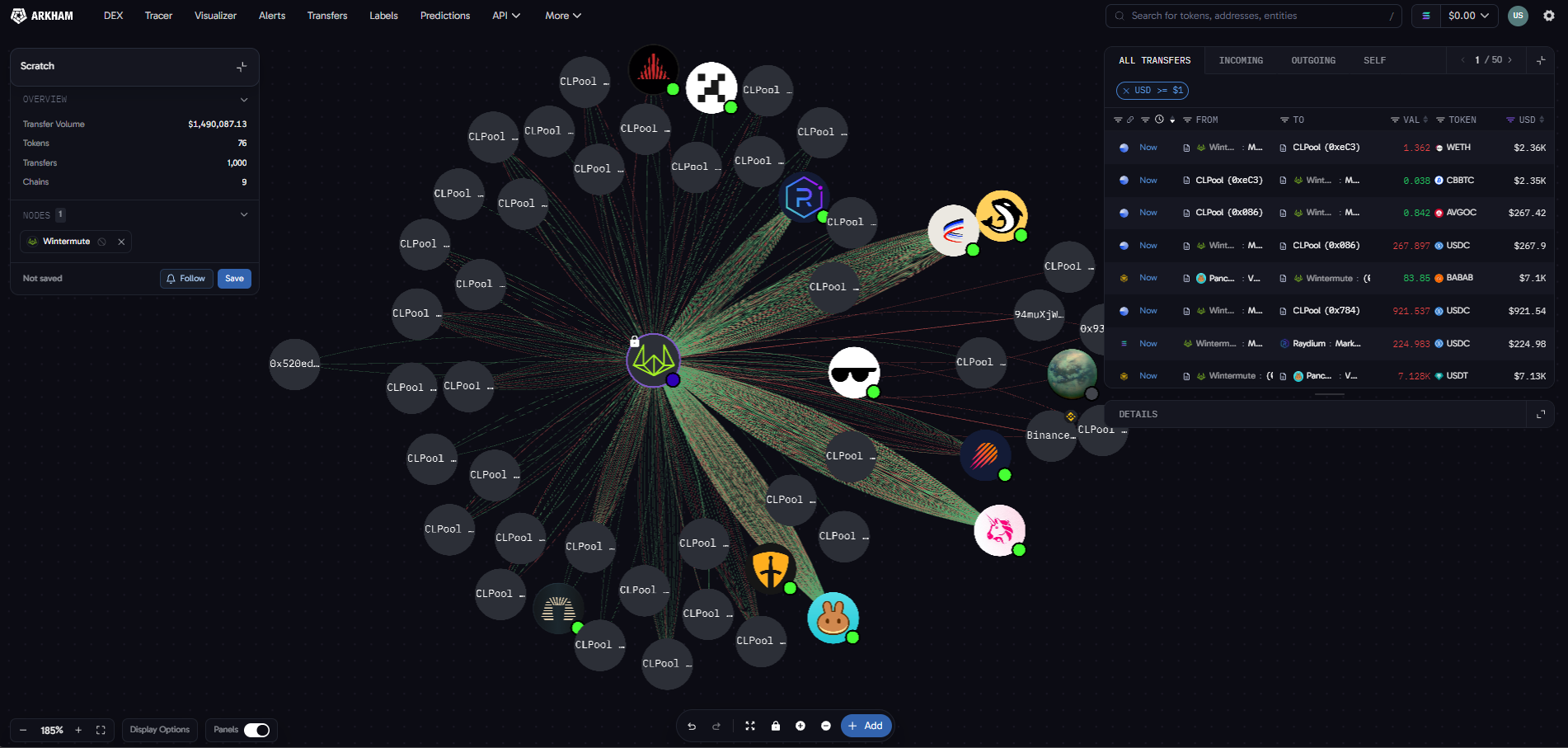
Step 5: Keep tracing: If you are looking for further information regarding the flow of funds after the bridging transaction, open the destination address and repeat the process. The Arkham Tracer and Visualizer lay out multi-hop flows across chains on a single graph.
Build with Arkham API
The bridges field on GET /tx/{hash} returns the bridge protocol, its status, and a source and destination leg naming the chain, address, token and amount at each end. It covers EVM, Tron, Solana, Bitcoin and HyperCore transactions. Either hash works, because the same bridge appears on both legs under the same id. Status values include success, failure and refund. Start with our guide on how to use a blockchain API, or request access at arkm.com/api.
Arkham currently supports 12 bridge protocols, allowing the respective legs of their bridging transactions to be traced seamlessly.
What Is a Cross-Chain Bridge?
A cross-chain bridge is a protocol that transfers either value or data from one blockchain to another.
Bridges exist because blockchains are effectively closed books. While most commonly used blockchains are public, each chain's validators check only their own ledger. A smart contract on Ethereum can read Ethereum balances, but it has no way to look at the Bitcoin ledger and confirm that a payment happened there.
In the traditional world, this would be equivalent to two land registries in neighboring countries. A deed filed in the first registry means nothing to a clerk in the second, who has no access to the first registry's files. To move a claim across the border, someone has to vouch for what was filed, and the second clerk has to decide whether to trust them.
Similarly, a cross-chain bridge plays the role of that witness. It watches for an event on the source chain, such as a deposit, and hands the destination chain evidence it will accept, such as validator signatures or a payout from a party that took the risk itself. Individually, bridges differ in design based on what the evidence is, who vouches for the deposits and why they should be trusted. These mechanisms are also where most of the risk lies.
How Do Cross-Chain Bridges Work?
Most bridges use one of four designs, and some protocols combine more than one.
Lock-and-Mint and Burn-and-Mint
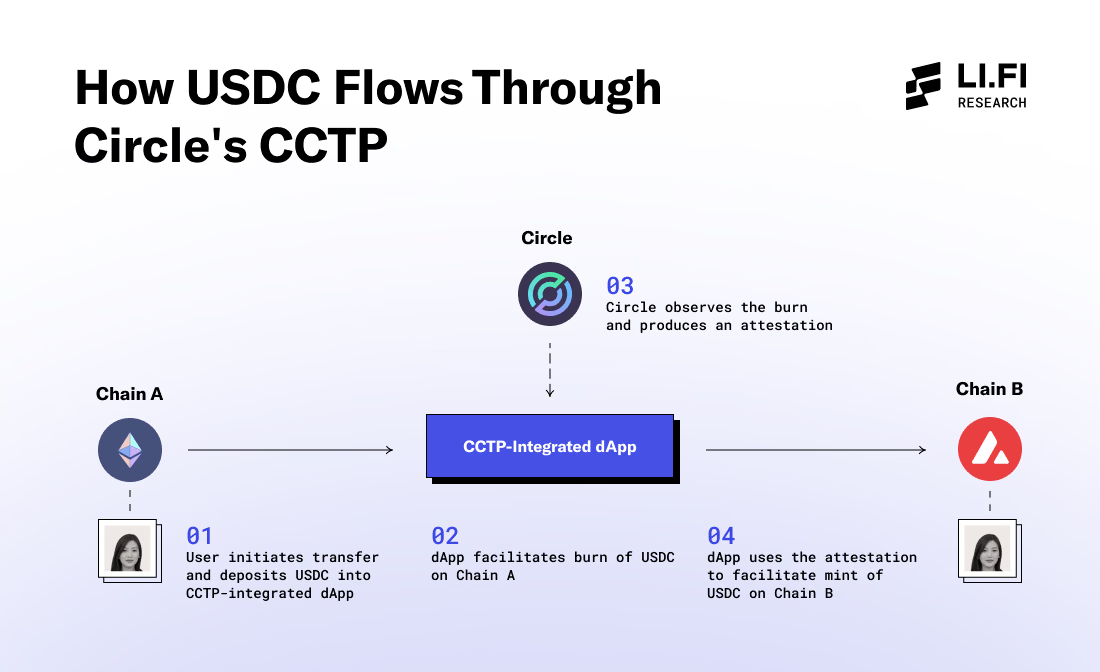
In lock-and-mint, the bridge holds the original asset in a vault on the source chain and issues a matching token on the destination chain. That token is an IOU, and it is only worth something while the assets are backed. Burn-and-mint works when one issuer controls the asset on every chain. Circle's CCTP destroys USDC on the source chain, and Circle's attestation service then authorizes a fresh mint on the destination. No pool of backing tokens is left sitting anywhere to be exploited and drained.
Liquidity Pools
In a liquidity pool model, the bridge keeps a pool of the same asset on each chain. A user deposits into the pool on chain A and is paid out of the pool on chain B, so no new tokens are minted. Stargate runs this way and uses LayerZero messages to keep its pools on different chains in sync. Naturally, this model can run into liquidity issues if a large sum is exiting from one chain to another.
Intent and Solver Networks
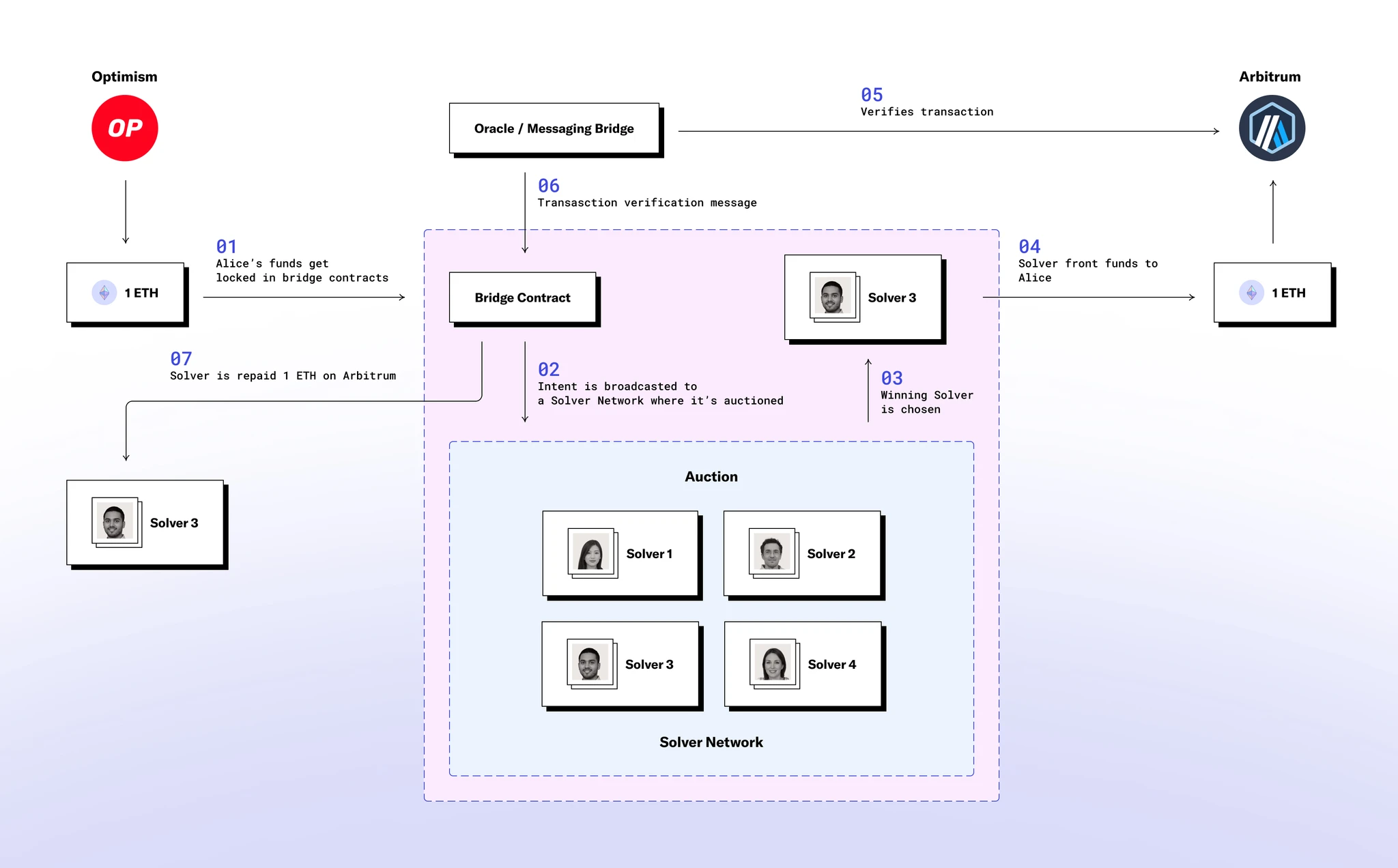
An intent is a signed request that states the result a user wants, such as "1 ETH on Base," without saying how to get it. Independent solvers, also called relayers or fillers, race to deliver that result from their own funds on the destination chain. The user's deposit stays in escrow on the source chain until the protocol confirms the fill and repays the solver. The user is paid in seconds, and the solver carries the slower job of proving what happened. Across Protocol, Relay Network, deBridge and Mayan's Swift route all use versions of this model.
Native-Asset Swap Networks
These protocols issue no wrapped tokens. A user sends a coin on their native chain, such as BTC, to a vault controlled by the network's validators and receives a different coin, such as ETH, on its native chain. The most famous example of this model is THORChain, which pairs every supported asset with its own token, RUNE, in shared pools. Chainflip prices swaps on a virtual market inside its own State Chain, with its vaults requiring 100 of its 150 validators to sign. Since they pay out native coins, these networks can move value from Ethereum straight onto the Bitcoin blockchain.
The 12 Bridge Protocols Arkham Tracks
Arkham's API pairs source and destination legs for the 12 protocols below. Each design comes from the protocol's own documentation.
Protocol | Design | Main chains | What it is used for |
Relay | Intents and solvers | 85+ chains | Fast transfers and swaps filled by solvers, then settled on Relay's own settlement chain |
Across | Intents and solvers | 21 chains including EVM Chains, HyperCore, and Solana | Fast transfers between Ethereum and its rollups, with relayer repayments checked by UMA's optimistic oracle |
deBridge | Intents and solvers via deBridge Liquidity Network | 24 chains including EVM chains and Solana | Cross-chain swaps filled by market makers, with no pooled funds held by the protocol |
Mayan | Intents (Swift auction), plus CCTP and Wormhole routes | 15 chains including Solana, Sui, and EVM chains | Swaps between Solana and EVM chains, with solvers bidding in an auction for each order |
Circle CCTP (v1 and v2) | Burn-and-mint | Chains with native USDC | Moving native USDC 1:1 between chains. Circle began retiring v1 on October 31, 2026. |
Circle Gateway | Unified balance, settled by burn-and-mint | EVM chains and Solana | Holding one USDC balance that can be minted on any supported chain in under 500ms for near-instant cross-chain access |
LayerZero | Messaging | 118 chains | Carrying verified messages between chains, including transfers of omnichain tokens such as USDT0 |
Stargate | Shared liquidity pools leveraging LayerZero cross-chain messaging | 95 chains including EVM chains and non-EVM chains such as Solana, Aptos, Sui, and more. | Moving large amounts of USDC, USDT and ETH across shared pools |
THORChain | Native swaps | 14 chains including Bitcoin, Ethereum, BNB Smart Chain, Avalanche, Base, and more. | Swapping native BTC, ETH and other coins without requiring the end user to deal with wrapped tokens |
Maya | Native swaps (THORChain fork) | 9 chains including Bitcoin, Ethereum, ZCash, Dash and more. | The same pool model as THORChain, with CACAO in place of RUNE |
Chainflip | Native swaps (via JIT AMM) | 6 chains including Bitcoin, Ethereum, Solana, Arbitrum, Polkadot and BNB Smart Chain | Native BTC swaps, priced by market makers at the moment of each trade |
Unit (Hyperunit) | Lock-and-mint | 8 chains including Bitcoin, Ethereum, Solana, Plasma, Monad, Zcash, Base and Avalanche into HyperCore | Depositing native BTC, ETH and SOL into Hyperliquid, where they trade as Unit tokens such as UBTC |
Are Cross-Chain Bridges Safe?
Bridges have been the target of several of crypto's largest thefts, for three main reasons.
Lock-and-mint and pool bridges, which used to be highly popular designs for cross-chain bridges, hold large deposits in one place, making them the prime target for such attacks. Additionally, most bridges are controlled by a small group of signers, so whoever controls enough of their keys can approve withdrawals with no matching deposit. Finally, a single bug in the bridge contract can wipe out an entire bridge, allowing attackers to withdraw without verification.
Three well-known exploits in 2022 exposed these three weaknesses.
Ronin (March 2022): Attackers used stolen validator keys to forge withdrawals of 173,600 ETH and 25.5 million USDC from the bridge behind Axie Infinity. The FBI attributed the theft to North Korea's Lazarus Group and APT38, and OFAC added the receiving address to Lazarus Group's sanctions entry.
Wormhole (February 2022): A flaw in the signature check on Wormhole's Solana contract let the attacker mint 120,000 wETH with no ETH behind it. Jump Crypto, which incubated the project, replaced the missing ETH the next day.
Nomad (August 2022): Once the first attacker showed that withdrawals could be copied, hundreds of others repeated the trick, and about $190 million was drained within hours.
These risks are still in place today. In April 2026, an attacker drained about $292 million in rsETH from Kelp DAO's LayerZero-powered bridge, which had been set up with a single verifier approving its messages. A bridged token is only as safe as the checks behind it, so it is worth knowing which model a route uses before moving a large amount.
How Hackers Use Bridges to Move Stolen Funds
Chain-hopping is a process by which stolen funds are moved across several blockchains in quick succession, usually swapping the asset at each stop. Each hop can move funds out of tokens an issuer could freeze, such as USDT or USDC, and each one makes the trail longer to follow.
Native-asset swap networks suit this well, especially into ETH or BTC where there are no custodians with the authority to freeze the coins.
Worked Example: The Bybit Hack
On February 21, 2025, attackers stole approximately $1.5 billion in assets from Bybit. The FBI attributed the theft to North Korea, and tracks this activity under the name "TraderTraitor". Arkham's data shows how the stolen ETH was moved immediately after the exploit. By March 5, Lazarus had bridged 500,000 ETH (about $1.3 billion) from Ethereum to native Bitcoin, with 72% of the proceeds going through THORChain including via its AsgarDEX front end. The instant exchange eXch was also used.
The trace on Arkham runs in four steps.
The stolen ETH sits in the Bybit Hacker address on Ethereum.
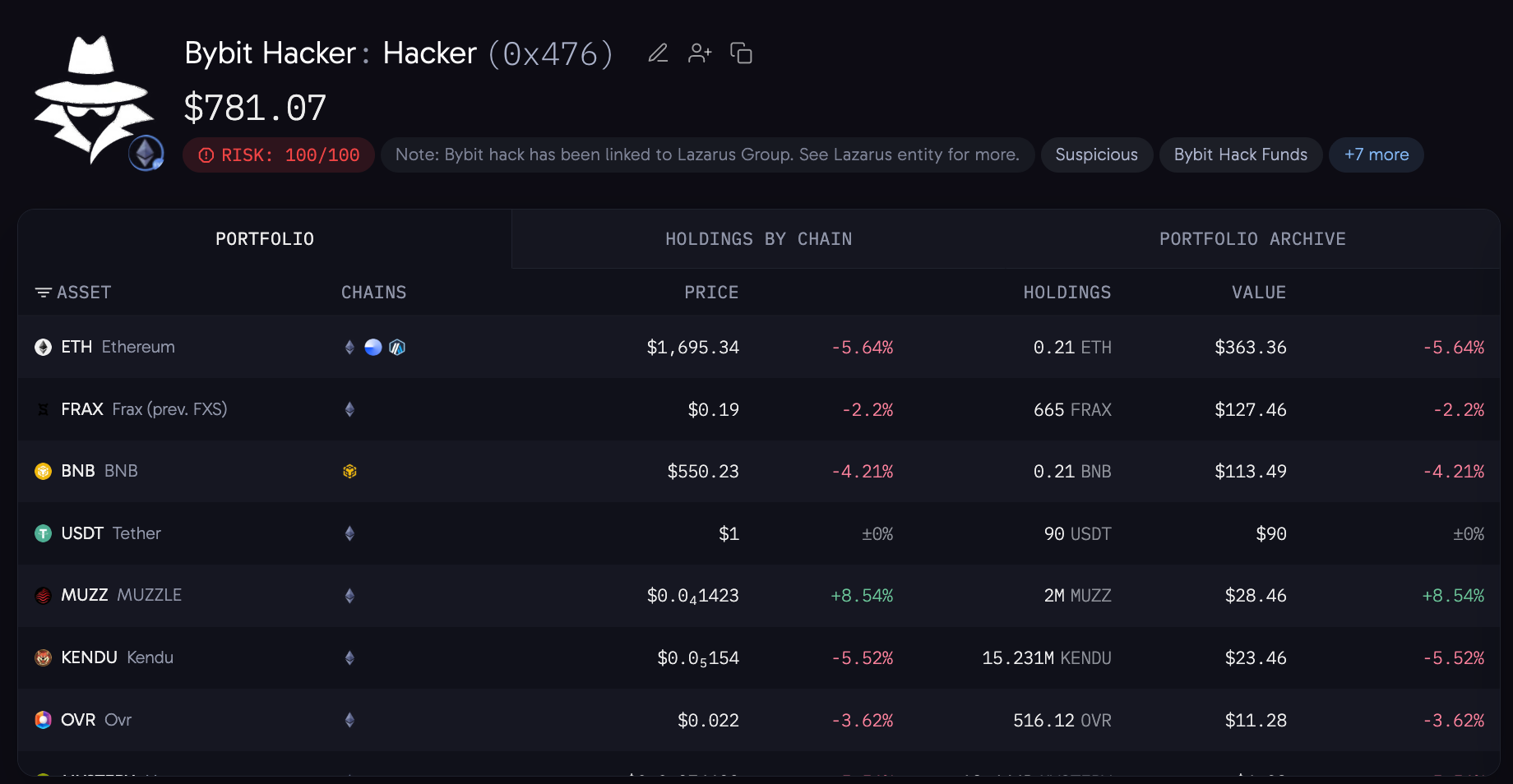
The funds move out to intermediary wallets before they reach the bridge.
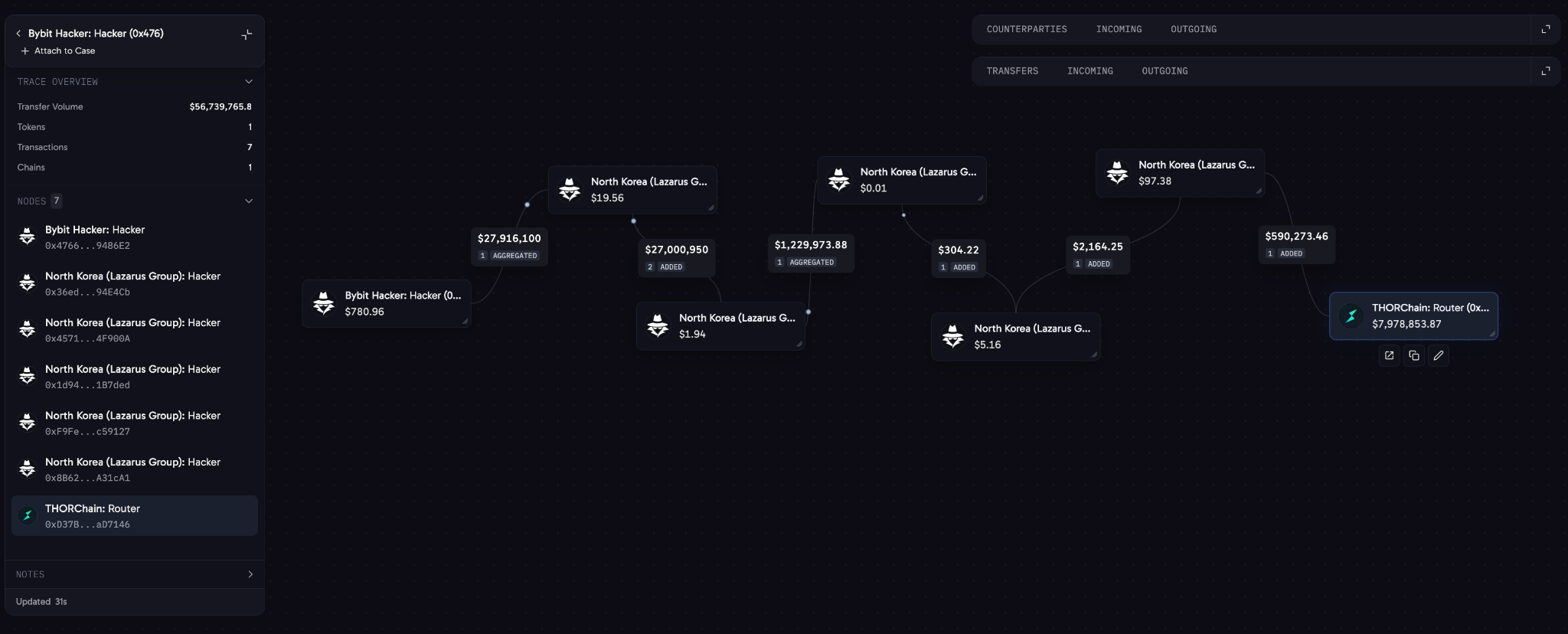
The wallets deposit ETH into THORChain on Ethereum. Each deposit carries a memo naming the Bitcoin address that should receive the payout.
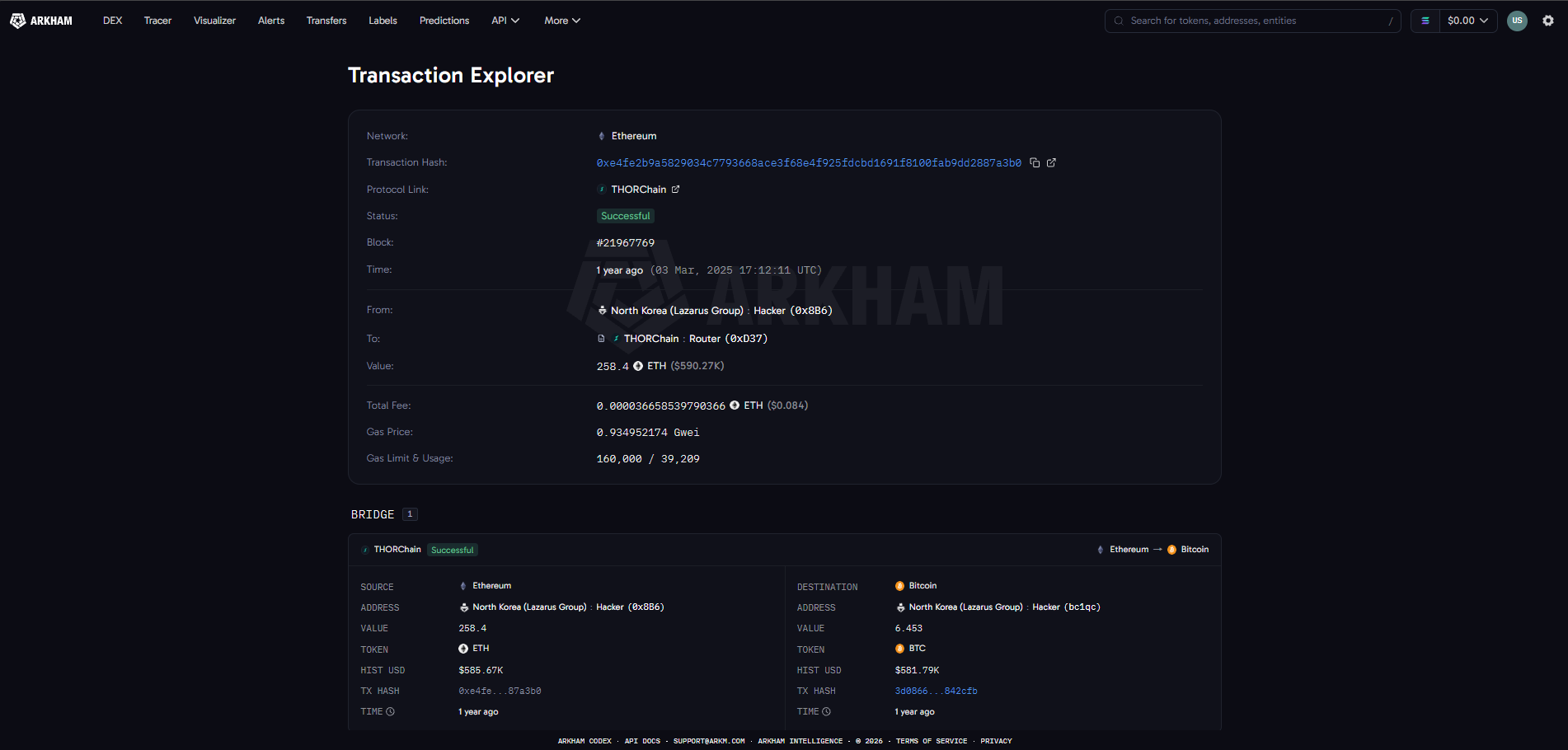
THORChain pays out native BTC from its vaults on the Bitcoin network. Arkham links each THORChain deposit to its Bitcoin payout, so the trace continues on the new chain.
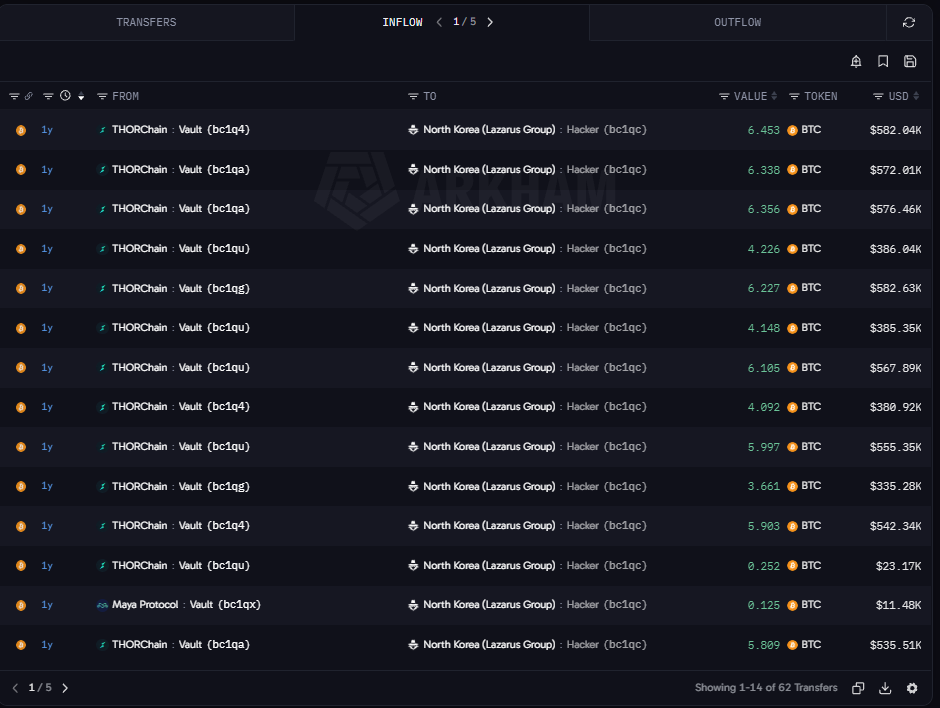
The same pattern appeared in April 2026. After the Kelp DAO exploit, the attacker moved $175 million in ETH to new addresses and began routing it through THORChain. In the October 2026 Binance hack, Arkham tracked about $6.36 billion as it left Binance hot wallets across ten blockchains.
Chain-hopping adds steps, but it does not erase the record. Each hop leaves a deposit on the chain the funds left and a payout on the chain they reached, and both are public.
Conclusion
Bridges let assets and messages move between blockchains that would otherwise sit apart. But, every hop still leaves a record on both sides, with a deposit on the chain the funds left and a payout on the chain they reached. Tracking a transfer comes down to decoding the bridge that connects those two records.

0xKira
0xKira is a crypto writer with roots in venture capital, having previously worked at Spartan Labs. An active DeFi user for the past five years, he has spent the last three years writing for industry publications like CoinMarketCap, as well as for a variety of DeFi protocols. 0xKira is known for his in-depth Twitter threads about the latest crypto trends - follow him on Twitter @0xKira_
More from 0xKira