Guide ·
Arkham Now Tracks Bitcoin Mixers
Arkham now tracks Wasabi CoinJoin and Samourai Whirlpool, showing live deposits, withdrawals and flagged funds from hackers and darknet markets

Bitcoin mixers are now live on Arkham. The first two are Wasabi CoinJoin and Samourai Whirlpool, each with its own page showing every mixing round, deposit and withdrawal.

What Is A Bitcoin Mixer?
A mixer pools bitcoin from many users into one shared transaction. Wasabi and Samourai both use a method called CoinJoin. Coins go in, get shuffled together, and come out at new addresses.
The aim is to break the link between where coins came from and where they went. Neither service holds users' funds. Each user keeps control of their own coins throughout.
Why It Matters
Mixers have a legitimate use: privacy. Blockchains are public and permanent, so some people mix coins to keep their finances private. But hackers use the same tools to hide stolen funds.
The numbers show how big a role this plays. In the past year, about 42,500 BTC entered Wasabi CoinJoin. Two exchange hacks account for about 15% of it.
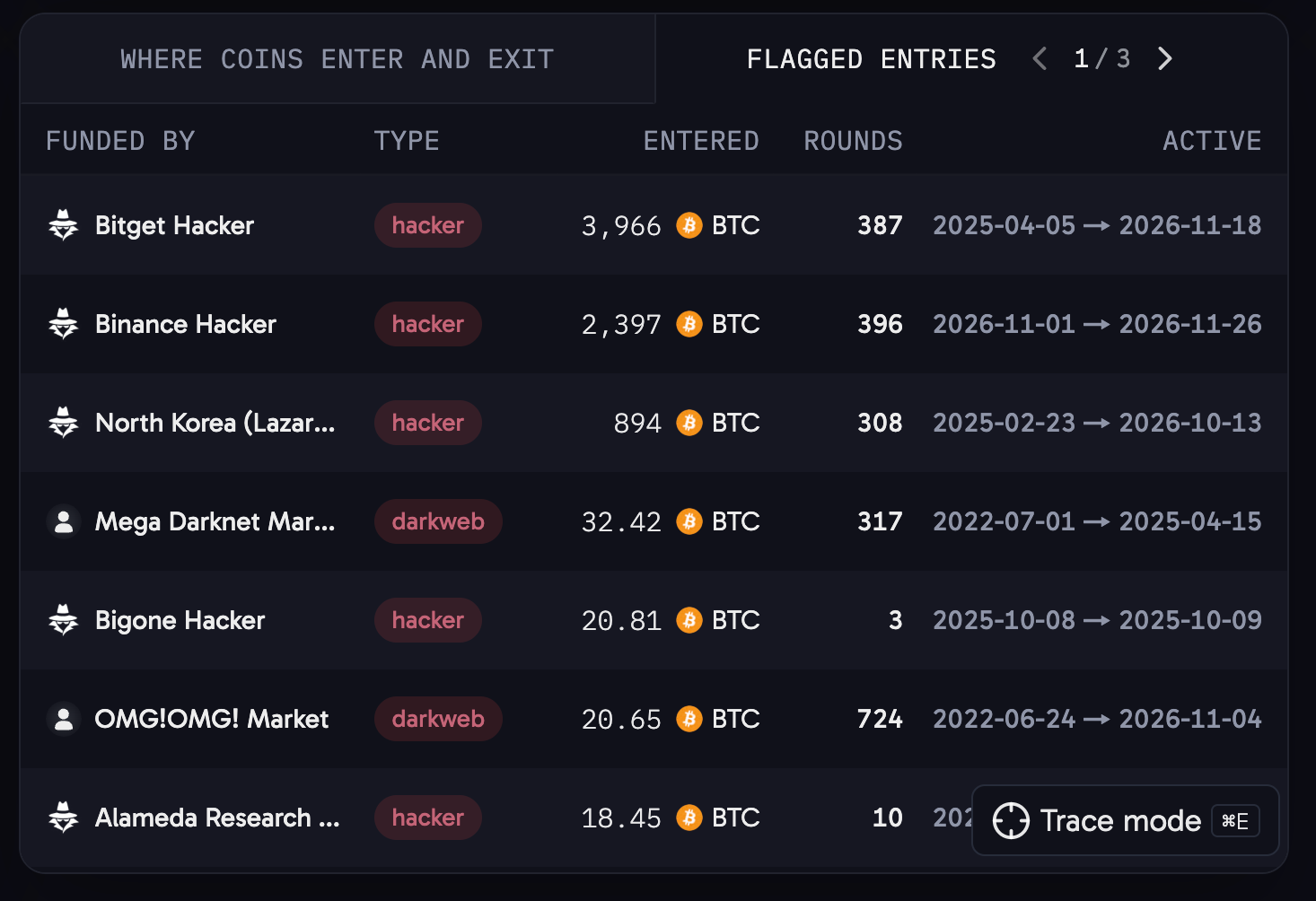
As of 26 November, Wasabi's Flagged Entries list on Arkham includes:
The Bitget Hacker: 3,966 BTC across 387 rounds
The Binance Hacker: 2,379 BTC across 395 rounds
North Korea's Lazarus Group: 894 BTC across 308 rounds
The Binance Hacker sent all of its 2,379 BTC in since 1 November, and was still sending more today. That's about 18% of everything that entered Wasabi in the last 30 days.
The list isn't just hackers. It also includes darknet markets such as OMG!OMG!, Mega and Hydra, and the Conti ransomware group. In total, 19 flagged entities have sent funds into Wasabi rounds.
For more on how North Korea moves stolen funds, see our Lazarus Group report.
How It Works
Each mixer has its own page, a new section of the Arkham web app. The top of the page shows how much BTC is still sitting in mixed coins that haven't been spent. For Wasabi, that's 9,120 BTC ($554M) across 220,769 coins.
It also shows how many rounds ran in the last 24 hours and 30 days, and how much BTC went in and came out.
Below that, you can browse every mixing round, deposit and withdrawal. Charts show mixed coins over time, money in vs money out, and rounds per day. Drag across a chart to see only the deposits and withdrawals from that period.
Following Funds Through A Mixer
Start with deposits by addresses or entities. Filter by a hacker or any other entity to see every coin they sent, and when.
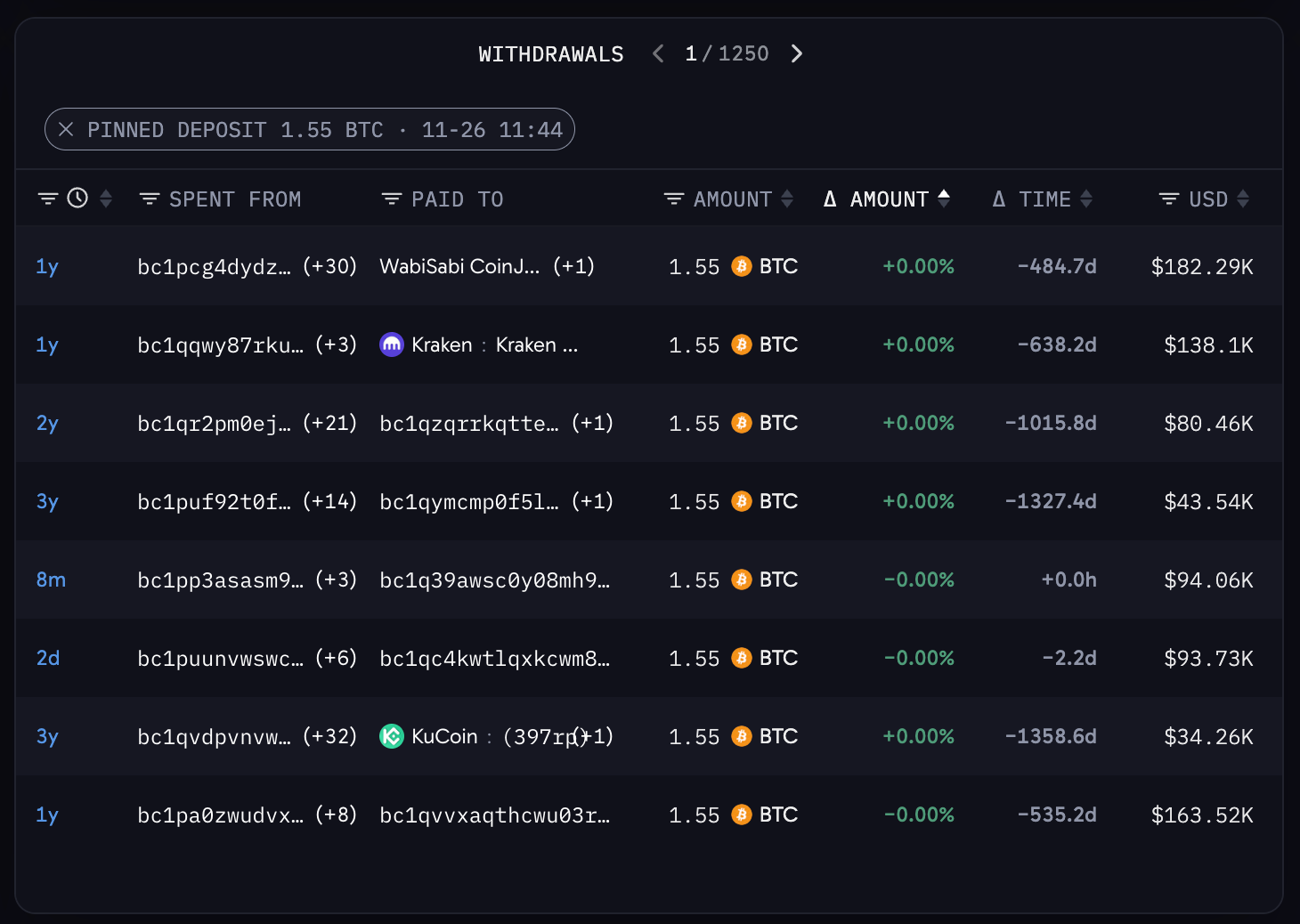
To see where the funds came out, pin a deposit by clicking on it, and Arkham sorts the withdrawals by how close they are in amount and timing - withdrawals with green numbers in the Δ AMOUNT column are worth looking into. This gives investigators a shortlist of leads to follow in Tracer and Visualizer.
Where Mixed Coins Come Out
Most mixed coins leave to fresh wallets. In the past year, about 97% of the BTC leaving Wasabi went to addresses with no Arkham label.
The rest went to known services, including cross-chain swap services and centralised exchanges. These are the points where an investigation can often pick up again.
How Well Does Mixing Hide Coins?
Investigators can use the mixer page to see how well the initial deposits have been hidden when they emerge from the CoinJoin.
A typical Wasabi round today has about 170 coins going in and 240 coming out. Each coin hides among a median of 13 others of the same size. About 2% of coins come out with an amount no one else in the round has, which makes them much easier to follow.
Explore The Mixer Pages
Mixer pages are live for all signed-in Arkham users. Arkham Enterprise users also get filtering and pinning, full history, the entities funding and receiving each mixer's coins, and the Flagged Entries list.
Sign in to explore them now: Wasabi CoinJoin and Samourai Whirlpool.

Finn Grant
Finn is a writer, formerly of The Daily Telegraph and New Scientist magazine. He writes about on-chain news, blockchain intelligence, and Arkham. He has been an active participant in crypto markets since 2020. He is also a pulished sci-fi writer - see his X profile for more: @finnwgrant.
More from Finn